
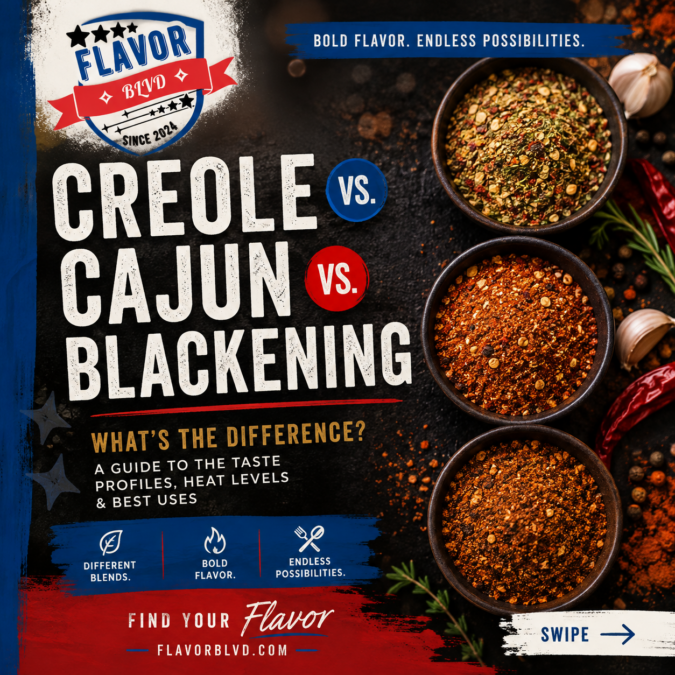
If you love bold Southern flavors, chances are you’ve cooked with Creole, Cajun, or Blackening seasoning. At first glance, these blends may seem interchangeable. They often share ingredients such as paprika, garlic, onion, pepper, and herbs—but their taste profiles and best uses can be noticeably different.
Understanding those differences can help you choose the right seasoning for seafood, chicken, vegetables, rice dishes, and more.
Creole Seasoning: Savory, Aromatic & Herb-Forward
Taste Profile: Savory • Herbal • Aromatic • Moderately Spicy
Creole seasoning tends to offer the most herb-forward and aromatic flavor of the three.
A typical blend may contain paprika, garlic, onion, black pepper and cayenne along with herbs such as thyme, oregano, and sometimes basil.
The result is a seasoning that delivers plenty of flavor without necessarily overwhelming the food with heat. You may notice the herbs and savory garlic notes first, followed by a gentle peppery warmth.
Creole seasoning works especially well when you want to build layers of flavor in a dish.
Great With:
Shrimp Creole, gumbo, seafood, chicken, rice, vegetables, soups, sauces, eggs and potatoes.
FlavorBlvd Taste Test: If you want something savory, aromatic and herbaceous with moderate heat, reach for Creole seasoning.
Cajun Seasoning: Earthy, Peppery & Spicier
Taste Profile: Peppery • Earthy • Savory • Spicy
Cajun seasoning typically puts more emphasis on peppers and savory spices.
Paprika, cayenne, black pepper, garlic and onion frequently form the foundation. Some blends contain herbs as well, but the overall flavor often feels more rustic, pepper-forward and spicy than Creole seasoning.
Cayenne brings the heat, black pepper provides a sharper bite, and paprika adds depth. Garlic and onion round everything out with a rich savory character.
That makes Cajun seasoning especially good for foods cooked over high heat, on the grill or in a skillet.
Great With:
Cajun chicken, grilled shrimp, crawfish, sausage, red beans and rice, jambalaya, grilled vegetables, potatoes, burgers and fries.
FlavorBlvd Taste Test: Choose Cajun seasoning when you want bold pepper flavor, savory depth and more noticeable heat.
Blackening Seasoning: Bold, Smoky & Built for a Crust
Taste Profile: Bold • Peppery • Smoky-Tasting • Savory
Blackening seasoning is a little different because the name describes both a seasoning style and a cooking technique.
Blackening blends commonly combine paprika, cayenne, black pepper, garlic, onion and dried herbs. The seasoning itself doesn’t necessarily have to contain a smoked ingredient to produce a smoky-tasting result.
The magic happens when heavily seasoned meat, fish or vegetables hit a very hot skillet or grill.
The spices toast and darken while the surface develops an intensely flavored crust. If butter or oil is used, the fat also helps create that characteristic richness.
The result is a flavor that can taste deeper, toastier and more intense than the seasoning did straight from the bottle.
Great With:
Blackened salmon, redfish, shrimp, chicken, steak, pork chops, burgers and hearty vegetables.
FlavorBlvd Taste Test: Choose Blackening seasoning when you want an intense, peppery crust with deep toasted flavor.
The Flavor Difference at a Glance
| Seasoning | Dominant Flavor | Heat | Herbal Notes | Best Character |
|---|---|---|---|---|
| Creole | Savory & herbal | 🌶️🌶️ | High | Aromatic & balanced |
| Cajun | Peppery & earthy | 🌶️🌶️🌶️ | Medium/Low | Rustic & spicy |
| Blackening | Bold & toasted | 🌶️🌶️🌶️ | Medium | Intense & crusty |
One important thing to remember: there is no single universal recipe for any of these blends. A Creole seasoning from one spice maker might be hotter than another company’s Cajun blend. Always look at the ingredients and taste as you cook.
So Which One Should You Use?
Think about the flavor you want to create.
Want herbs and complexity? Go Creole.
Want pepper, spice and rustic Southern flavor? Go Cajun.
Want a bold, dark crust on seafood or meat? Go Blackening.
Better yet, keep all three in your spice cabinet.
The same piece of chicken, shrimp or salmon can become three completely different meals simply by changing the seasoning and cooking technique.
Find Your Flavor
Great cooking isn’t always about complicated recipes. Sometimes it’s about understanding how a few spices can completely transform an ingredient.
Creole brings the herbs.
Cajun brings the heat.
Blackening brings the crust.
Experiment with all three and discover which flavor belongs in your kitchen.
FlavorBlvd — Find Your Flavor.